With a reactor capable of accelerating the decomposition of water pollutants, such as emerging pollutants and heavy metals, UdeC scientists from different disciplines are working together to improve urban ornamental or productive irrigation.
By: Iván Tobar Bocaz, Journalist, Faculty of Chemical Sciences – comunicacionfcq@udec.cl
Images: Faculty of Chemical Sciences
Statistics indicate that gray water from showers accounts for approximately 70% of the water consumption in an average urban house. This figure is critical given the water crisis, which, according to projections, will intensify dramatically from 2030 onward.
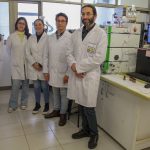
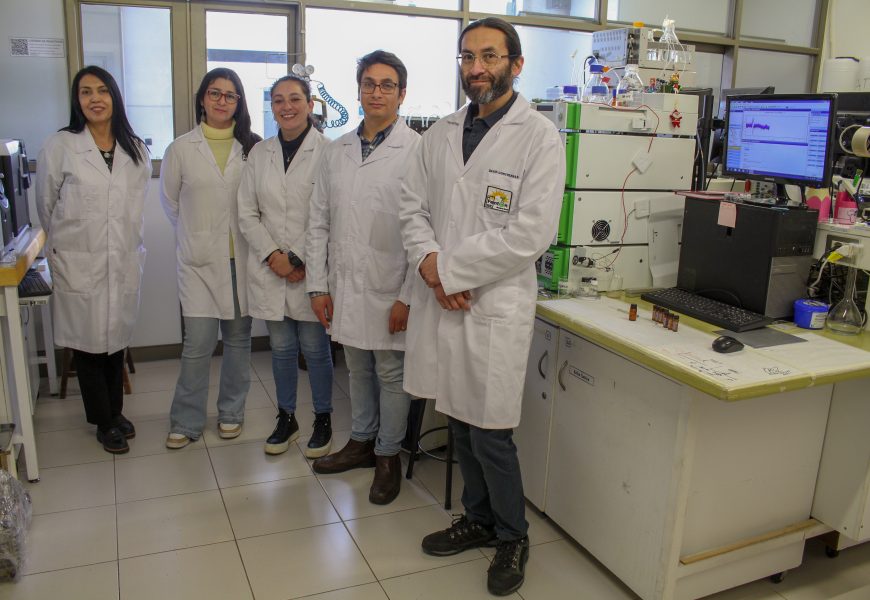
This challenge prompted a scientific team to develop a prototype that allows the treatment and reuse of shower water. This is a project funded through the Advanced Technologies FONDEF, led by Dr. Romina Romero Carrillo, a professor from the Faculty of Chemical Sciences, that draws on years of fundamental research to provide a concrete, scalable response to the water crisis affecting Chile and to improve the quality of life of its inhabitants.
The project, which completed its first year in September 2025, focuses on designing a reactor capable of accelerating the decomposition of pollutants in gray water by applying light through a chemical catalyst material, in addition to biochar, to remove heavy metals, and to reuse this water in urban ornamental or productive irrigation.
The three-phase prototype and its chemistry
The prototype is designed to remove emerging organic pollutants, such as shampoos, soaps, and other hygiene products, as well as parabens and triclosan. “What we are looking for is the development of a device that first handles the organic pollutant disinfection stage. The concentrations are not so high, which makes its remediation and subsequent reuse viable and efficient,” explains Dr. Romero.
The treatment’s first phase consists of an advanced oxidation process that uses a photocatalytic material developed by the team, activated with light (UV or simulated solar), which generates radicals that effectively degrade organic compounds. After this oxidation, the water passes to a second key stage: a heavy metal adsorption system, whose development, Dr. Myleidi Vera, a specialist in polymers, contributes to. This phase guarantees the retention of metals and any residual fragments. The process concludes with a disinfection stage of microorganisms, essential to achieve a quality suitable for irrigation.
Fundamental science and security
The strength of the proposal lies in its research basis. The team includes Dr. Adolfo Henriquez, a specialist in photocatalysis and materials, and Dr. David Contreras, a specialist in advanced oxidation processes. “If we break down pollutants that are not toxic and end up being so, such as the generation of free benzenes,” Dr. Romero exemplifies, “the remedy can be worse than the disease.” Therefore, an exhaustive analytical monitoring is carried out, which serves as the basis for training human capital and generating patents and publications.
The team has been strengthened for the scaling challenge, which implies a “world of difference when going from milliliters to liters,” the scientist details and explains that, for this reason, in the second year of implementation, Dr. Luis Pino, a chemical civil engineer from the Faculty of Engineering, was hired to model the loading and unloading phenomena of the reactors.
Impact on quality of life
A key achievement was the integration of the three stages of the real gray water treatment, thereby fulfilling the first milestone of the project through TRL 3 validation. “Although the current scale is 100 milliliters, the goal for the next four years is to achieve continuous treatment of 100 liters of water and develop a real pilot-scale prototype that can be tested directly at the shower water outlet in a domestic environment,” explained Dr. Romero.
The project’s social contribution is materialized in the reuse of water for non-potable purposes, such as eco-irrigation and urban horticulture, areas led by the architect Patricia Puentes. This capacity will be validated by Dr. Erick Zagal of the Faculty of Agronomy at UdeC’s Chillán campus. “The recovery of water resources is a direct factor in the quality of life,” as Dr. Romero highlights, “exposure to a landscape of cement and earth increases stress levels, while access to green areas — which tend to decrease in urban sectors with fewer resources — is a proven factor of well-being.”
Last modified: 20 de mayo de 2026