
By: Iván Tobar Bocaz, Journalist – Faculty of Chemical Sciences / comunicacionfcq@udec.cl
Images: Courtesy of the Faculty of Chemical Sciences
Leer en español
Since the 19th century, the widespread use of hydrocarbons has incorporated different products into our daily lives, the most common being fuels. However, given its versatile properties, this nonrenewable resource is also found in lubricants, waxes, plastics, detergents, paints, and even pharmaceuticals, fertilizers, and cosmetics. In just over 100 years, it has offered humanity many solutions, although it is also causing environmental pollution and problems to human and animal health.
How do we replace these polymers that have made our lives so easy?
The team led by Dr. Carla Herrera Hernández has been working for ten years to answer this question, looking for compounds in biomass capable of chemically replacing hydrocarbons. Cellulose is the protagonist. It is a biomolecule in plants with a chain structure, a polymer whose combinations and interactions offer interesting alternatives.
Less polluting fuels
“Transforming biomass-derived molecules into compounds with high commercial value allows closing the carbon cycle, reducing the environmental footprint of the chemical industry, and promoting the integral use of renewable forest resources and waste,” Dr. Herrera emphasizes. An example of this objective is the production of fuel additives, which improve their performance and reduce their environmental impact.
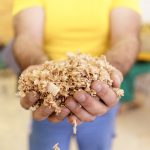
From forest industry waste, such as pine sawdust, the Academic from the Department of Physical Chemistry of UdeC’s Faculty of Chemical Sciences has obtained furfural (FUR) and levulinic acid (LA), derivatives of hemicellulose and cellulose. These platform molecules can be transformed into stable, energy-dense liquids that can be combined homogeneously with gasoline (miscible), improving their efficiency.
“These additives help reduce polluting emissions, improve the thermal stability of the fuel, and reduce the use of fossil derivatives, thus integrating green chemistry into the energy industry,” highlights Dr. Herrera.
This line of research seeks to impact the aviation industry, which, as part of the SAF 2024 Public-Private Agreement, hopes to reduce the use of fossil fuels by 2050 and replace them with sustainable aviation fuels.

Green science
Studying green alternatives means exploring new materials and ways to obtain them. Dr. Herrera is particularly interested in MXenes, a class of two-dimensional inorganic compounds with exceptional electronic and surface properties. With them, she hopes to design active and selective catalysts. The academic says the proposal to “combine MXenes with individual metal atoms represents an innovative frontier in heterogeneous catalysis, which allows optimizing reactions at the atomic level.”
“What we are looking for is to modify the surface of the Mxenes so that they have more ‘entry doors’, where the molecules we want to transform can be fixed,” she explains. To achieve this, functional chemical groups are added that improve the interaction between the catalyst and the reactants. “Then, we place individual metal atoms such as platinum (Pt), copper (Cu), and cobalt (Co) on that surface, so that they act as active centers where the reaction occurs,” she details.
In the opinion of the scientist, hydrogenation is key to developing more efficient and sustainable technologies. It makes producing advanced biofuels and ecological solvents possible by using renewable raw materials and contributing to the circular carbon economy.
Frontier collaboration
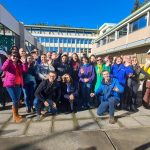
The research has international collaborations with Dr. Ana Belén Dongil, from the Institute of Catalysis and Petrochemistry of Madrid, and Dr. Duncan Gregory, from the University of Glasgow. At UdeC, along with Dr. Herrera, the academics Catherine Sepúlveda and Gina Pecchi participate, who lead different strategic lines of applied catalysis in biomass valorization. The team also includes Yonatan Parra, a student of the Chemical Analyst degree, and Dana Arias, a Ph.D. candidate in Sciences with a minor in Chemistry.
Valorizing the by-products and waste of forestry activity in a region like Biobío provides an important impetus for moving towards a knowledge-based economy. “We are not only looking for more sustainable processes, but this is a strategic axis in the global energy transition,” concludes the researcher.
For more on the SAF 2024 Public-Private Agreement.
Last modified: 3 de septiembre de 2025