Column by: Jonathan Guzmán Sandoval, jguzman@udec.cl
Head of Research and Postgraduate Unit – Los Angeles Campus
Professor of the Department of Basic Sciences
UdeC School of Education
Los Ángeles Campus.
Very close to the border with Argentina, where the road ends, and the plains that extend beyond the Antuco volcano and the Sierra Velluda begin, there is a little-known and poorly studied landscape: the high Andean steppe of the commune of Antuco.
This corner of the Biobío Region, at more than 1,500 meters above sea level, combines extensive plains of low vegetation, resistant thickets, and, on some slopes, small relicts of forest dominated by the Antarctic Beech or ñirre, one of the few tree species capable of resisting these conditions. Higher up, the vegetation becomes even more austere, consisting of thorny thickets and tall grasslands, adapted to wind, cold, and water scarcity—an extreme environment, where life makes its way quietly and resiliently.
Since 2024, this place has served as the setting for an interdisciplinary project that studies the area’s mammal and insect fauna, as part of an initiative funded by the Vice-Rectorate for Research and Development (VRID).
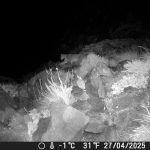
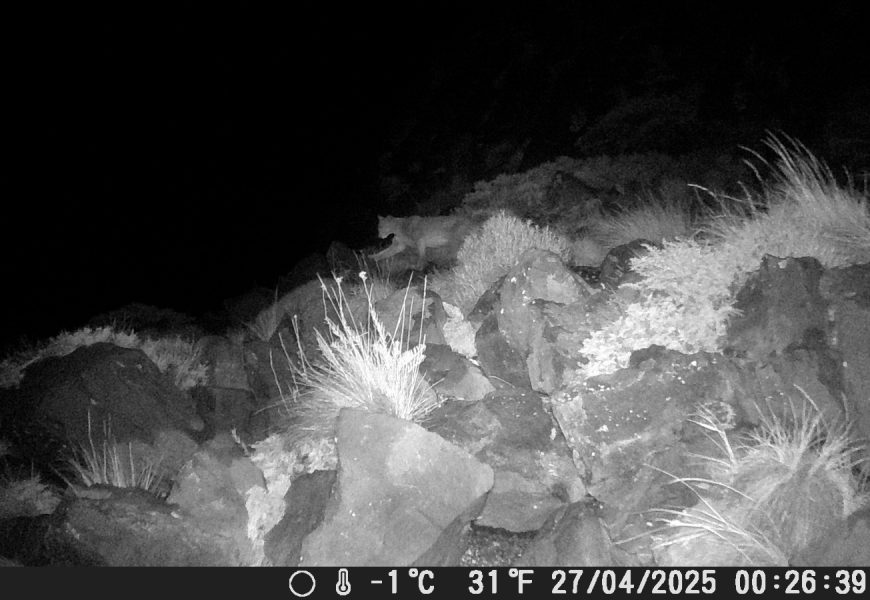
Through trail cameras and field observation, fascinating records have already been documented in the area, where species such as the culpeo fox, the puma, and the vizcacha stand out among the meso mammals. To this are added at least five species of rodents, native to the genera Abrothrix, Loxodontomys, and Phyllotis, in addition to a couple of species not yet determined or previously cited for the area, which accounts for the biological value of this little-explored ecosystem.
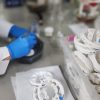
But beyond simply listing species, the research seeks to understand the roles these mammals perform within the ecosystem: what do they eat? Do they participate in seed and/or spore dispersal? How does their morphology vary in response to the extreme conditions of the place? In parallel, insects and reptiles in the sector are being inventoried, which also reveals key aspects of the territory’s ecological balance.
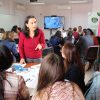
The initiative is led by the author of this piece, Dr. Jonathan Guzmán, in collaboration with professors Dr. Fabián Cifuentes and Dr. Jorge Rojas Bravo. An essential part of the project is carried out by undergraduate thesis students, who participate in field work, generating significant learning from direct experience with local biodiversity. To date, two students of the Pedagogy in Natural Sciences and Biology degree (Ignacio Reyes and Fernanda Urra) have already graduated with theses in this area, and three other people are developing their works within the framework of this same line of research: they are Catalina Cariaga, Diego Manríquez, and Janis Espinoza. Their commitment and enthusiasm have been key to the project’s development, contributing not only to the hard work in the field but also to the analysis and systematization of the information.
The project contemplates a second stage, focused on outreach and environmental education, that will share these findings with the local community through school talks and awareness-raising activities, in collaboration with CONAF staff and community organizations.
Despite being in the middle of the Biobío Region, this high-Andean sector remains a kind of “natural laboratory” that is just beginning to be explored. A place where every new clue — a footprint, an image, an unknown insect — can become a valuable find. And where scientific work, university education, and territorial commitment intersect to open windows into a wild world that still has a lot to show.
Last modified: 20 de mayo de 2026