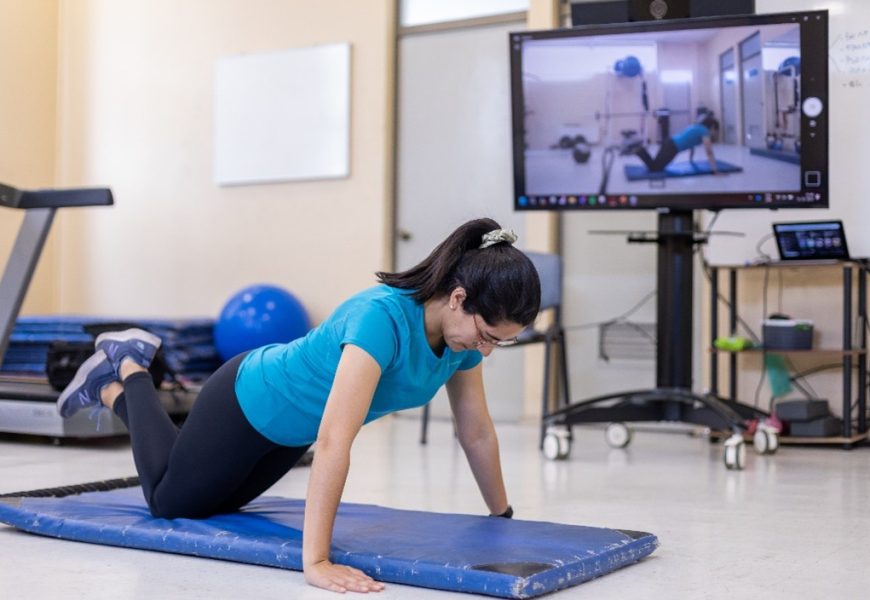
Almost half of the population in Chile suffers from obesity, and according to WHO data, about 31% of the adult population does not reach the minimum recommended levels of physical activity. At UdeC, specialists are looking to reverse this scenario, motivating the population to exercise through APPTIVATE.
By: Soledad Toledo Cabrera, Journalist – Vice-Rector’s Office for Research and Development – VRID UdeC lucabrer@udec.cl
Images: Center for Healthy Living
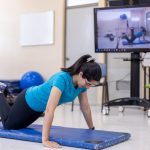
The figures are clear and alarming: our country has high rates of sedentary lifestyle (55%) and obesity (42%) in the adult population, numbers that are also related to diseases such as diabetes, hypertension, and cardiovascular problems. In this context, the University of Concepción is developing Apptivate, a project funded by the Biobío Regional Government and led by specialists from the Center for Healthy Living (CVS UdeC), which aims to encourage the population to exercise.
Under the leadership of Dr. Miquel Martorell Pons, CVS’s director, this platform has been developed to customize physical exercise routines, which have been shown to improve physical activity and health indicators across groups tested. Its origins date back to before the pandemic and were led by Dr. Rafael Zapata Lamana, an academic at the UdeC School of Education at the Los Angeles Campus. Currently, the project has moved onto a second stage, led by Dr. Juan Carlos Caro from the Faculty of Engineering, to update the application and add more functionalities.
Unlike other applications, Apptívate learns from user behavior using an artificial intelligence model. “The idea is to motivate. It gives feedback to the user, adapting to their needs so that they can do the exercise,” explains Dr. Martorell. The app also uses features such as notifications and a group ranking system to encourage users to complete the exercises periodically.
A public health problem
“There are not always adequate spaces for physical activity at CESFAMs, and many patients stop going to these sessions. This alternative was thought of so that they could follow a physical conditioning program at home,” explained Dr. Martorell. The tool has also made it possible to develop research with patients with defined profiles. For example, a controlled study was conducted with 41 patients from two family health centers (CESFAM) in the Biobío Region. Those who used the application for 10 weeks showed improvements in their aerobic capacity (44.4% on average) and reductions in their waist circumference (2.6%). These findings confirm, on the one hand, the importance of exercise and, on the other, how these technologies encourage it.
A second study, involving 70 people, compared the effects of a vegan diet (VEGD) combined with a resistance training program (RTP) with those of an omnivorous diet. The results showed that the training effect was greater in the VEGD-RTP group, reducing body fat by an average of 1.2%.
Tool in development
It is expected that Apptivate will make progress by incorporating features already found in cell phones, such as motion sensors or step counters, to record users’ daily behaviors.
“Obviously, depending on the type of disease, the application does not replace a health professional, who must guide the physical activity of people with chronic problems, or of a certain age. There is a professional behind who is looking at the data and adapting the exercises to the needs of the patients,” said Dr. Martorell.
Dr. Caro, for his part, seeks to optimize Apptivate’s design and functionality to improve user adherence through reinforcement learning. In 2025, a pilot was conducted with more than 500 students from UdeC and the Virginio Gómez Institute to assess the importance of facilitating access to physical activity by personalizing both the exercises and the times of day available. It is expected to conduct a study at universities in Europe and Latin America by 2026 to understand cyclical factors and the motivations behind the use of these tools.
In the future, Apptivate hopes to provide personalized routines and introduce additional tools, such as tips for maintaining a balanced diet and managing stress and anxiety. Finally, the aim is to create sustainable support networks over time, where individuals with similar characteristics can serve as virtual and face-to-face companions, helping each other form healthier habits.
Last modified: 20 de mayo de 2026