Health and well-being are objectives that constantly capture scientific, technological, social, and political interest. However, the challenges posed by environmental transformations and lifestyle changes remind us that health is a complex phenomenon, deeply interconnected with our social relationships, food systems, ecosystems, and the technologies we develop. Understanding and addressing this complexity requires an interdisciplinary approach in which research and innovation play a fundamental role.
The articles in this issue reflect precisely that diversity of approaches. From the first line of health defense, which highlights the importance of the quality of the water we drink, up to the reflection on good treatment in healthcare, which reminds us that the quality of health systems depends not only on technological advances, but also on the human dimension of care.
Mental health also occupies a relevant space in this issue. The article on an artificial intelligence system that supports the diagnosis of depression shows how new technologies can improve early detection and access to clinical support tools. At the same time, the analysis of mental health in young people raises urgent questions about the emotional well-being of the new generations.
Biomedical and clinical research is also reflected in contributions exploring new tools and approaches for diagnosis and treatment. The use of infrared light to observe the skin opens up possibilities for more accurate, less invasive assessment methods. At the same time, the article “From toxins to therapies” shows how natural compounds can be transformed into valuable therapeutic tools. In the dental field, work on resistance, aesthetics, and dental sustainability reflects how even traditionally clinical areas are now subject to sustainability and environmental responsibility criteria.
Another set of contributions invites us to expand our understanding of health beyond the strictly medical field. The One Health approach recognizes that human health is intimately linked to animal and environmental health, stressing the need for integrated approaches to address threats such as emerging diseases, climate change, and ecosystem degradation. Along the same lines, the article on the essence of a healthy ecosystem highlights the importance of conserving functional natural systems that support fundamental life-sustaining processes.
The relationship between health and nutrition also appears as an important topic. The geography of food shows how territorial and social factors profoundly condition the availability, distribution, and access to food. At the same time, reflection on conscious eating invites us to reconsider our food practices from a perspective that integrates personal well-being, culture, and sustainability.
Finally, technological innovation appears to be a key tool for strengthening care for people. The article “Technology for caring” explores how technological development can improve the quality of life, support healthcare, and contribute to more accessible and efficient systems.
Taken together, the papers presented in this issue reflect a clear message: well-being is not the result of a single factor, discipline, or intervention. It is the product of the interaction between science, technology, society, and nature. Promoting health, therefore, implies strengthening interdisciplinary research, fostering responsible innovation, and moving towards development models that put the well-being of people and ecosystems at the center.
We invite you to enjoy this new issue of the R&D magazine, dedicated to health and well-being, and disseminating knowledge generated at the University of Concepción.
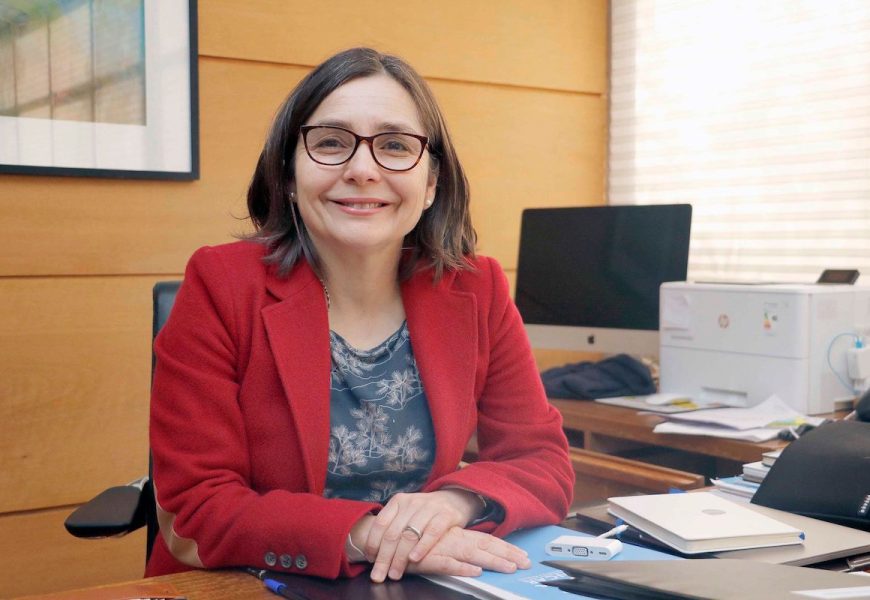
Dr. Andrea Rodríguez Tastets
Vice-Rector for Research and Development
University of Concepción